
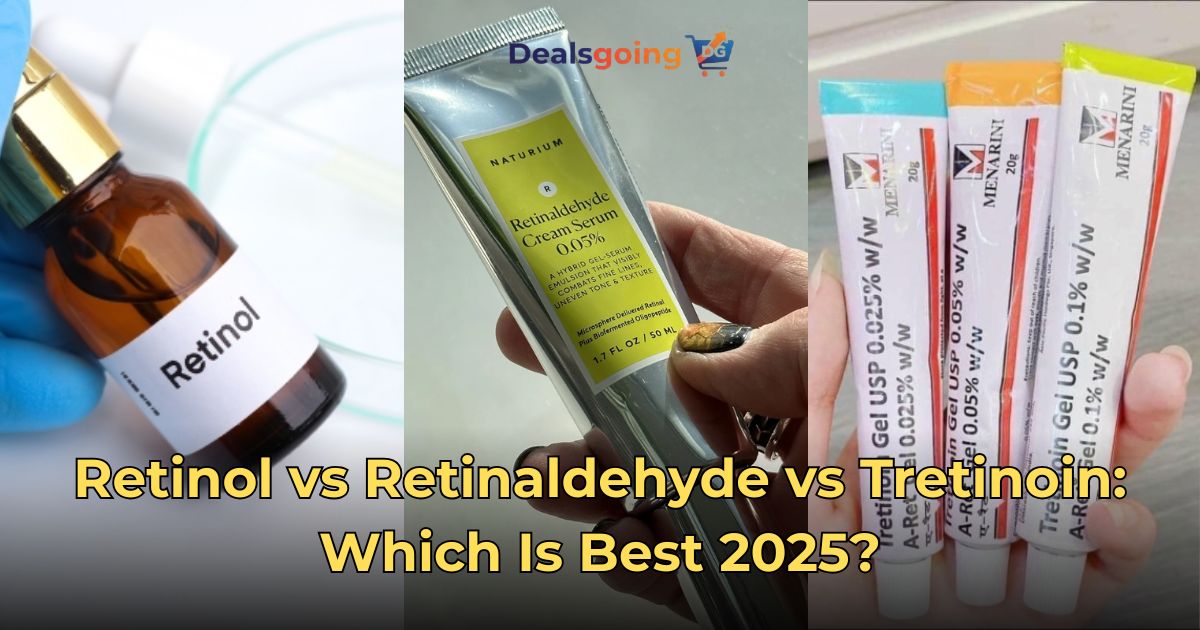
Retinoids are the gold standard for anti-aging, acne, and texture-but with three main options, choosing the right one can feel overwhelming. Retinol (OTC favorite), retinaldehyde (the middle-ground powerhouse), and tretinoin (prescription beast) all work, but they differ in strength, irritation, and results. This 2025 guide breaks down the science, pros/cons, and exact recommendations so you pick the best one for your skin type, budget, and goals-without wasting money or time on trial-and-error.

What Are Retinoids? (The Quick Science)
Retinoids are vitamin A derivatives that speed up cell turnover, boost collagen, unclog pores, and fade pigmentation. They convert to retinoic acid (the active form) in your skin-but at different speeds:
- Retinol: 2–3 conversions → slowest, gentlest
- Retinaldehyde: 1 conversion → medium speed, medium strength
- Tretinoin: Already retinoic acid → fastest, strongest
All three fade wrinkles, smooth texture, and clear acne-but tretinoin is 20–100× more potent than retinol.
Retinol: The Beginner-Friendly OTC Hero
Best for: First-timers, sensitive skin, budget-conscious. Strength: 0.1–1 % (OTC max). Converts slowly → less irritation. Pros:
- Affordable ($10–$30) and accessible (drugstore/pharmacy).
- Minimal purging or redness for most people.
- Great for mild acne, fine lines, uneven tone.
Cons:
- Slower results (3–6 months for visible change).
- Less effective for deep wrinkles or severe acne.
- Many “retinol” products are too weak (under 0.3 %).
2025 Top Picks:
- The Ordinary Retinol 0.5 % in Squalane ($8) – Clean, affordable starter.
- CeraVe Resurfacing Retinol Serum ($18) – Gentle with niacinamide for barrier support.
- Paula’s Choice 1 % Retinol Booster ($50) – Strong but buffered for sensitive skin.
Who Should Use It: Beginners, dry/sensitive skin, or anyone under 30 just preventing aging.
Retinaldehyde: The Goldilocks Option (Not Too Weak, Not Too Harsh)
Best for: Intermediate users wanting faster results without a prescription. Strength: 0.05–0.1 % (OTC). Converts 10× faster than retinol → results in 2–4 months. Pros:
- Balances power and tolerability-less irritating than tretinoin, more effective than retinol.
- Excellent for moderate acne, pigmentation, and early wrinkles.
- Stable in most formulas (less degradation).
Cons:
- Still OTC but pricier ($30–$80).
- Can cause mild purging (2–4 weeks).
- Not as widely available as retinol.
2025 Top Picks:
- Geek & Gorgeous A-Game 0.05 % ($15) – Hungarian brand, clean, fast-absorbing.
- The Ordinary Retinal 0.2 % Emulsion ($15) – Affordable upgrade from retinol.
- Medik8 Crystal Retinal 3 (0.03 %) ($60) – Graduated strengths for building tolerance.
Who Should Use It: 30–45-year-olds with some experience, combination skin, or those frustrated with slow retinol results.
Tretinoin: The Prescription Powerhouse (For Serious Results)
Best for: Advanced users, severe acne, deep wrinkles, or hyperpigmentation. Strength: 0.025–0.1 % (Rx only). Direct retinoic acid → immediate action. Pros:
- Gold standard-clinically proven for acne (80 % clearance) and wrinkles (up to 50 % reduction).
- Long-term: Thicker skin, fewer breakouts, even tone.
- Generic versions affordable ($20–$50/month with GoodRx).
Cons:
- Requires prescription (dermatologist or online like Curology).
- High irritation risk (retinoid dermatitis: redness, peeling, dryness).
- Strict rules: Night only, sunscreen mandatory, no mixing with acids.
2025 Top Picks:
- Generic Tretinoin 0.05 % Cream ($25/month via GoodRx) – Most common starting strength.
- Differin Gel (Adapalene 0.1 %, OTC retinoic acid cousin) – $15, gentler entry to Rx.
- Custom formulas from Apostrophe or SkinRx ($60/month) – Buffered with soothing actives.
Who Should Use It: 40+, stubborn acne/rosacea, or anyone committed to 6–12 months of adjustment.
Head-to-Head Comparison: Retinol vs Retinaldehyde vs Tretinoin
| Feature | Retinol | Retinaldehyde | Tretinoin |
|---|---|---|---|
| Strength | Low (0.1–1 %) | Medium (0.05–0.1 %) | High (0.025–0.1 %) |
| Results Timeline | 3–6 months | 2–4 months | 1–3 months |
| Irritation Risk | Low | Medium | High |
| Availability | OTC | OTC | Prescription |
| Price/Month | $10–$30 | $15–$60 | $20–$80 |
| Best For | Prevention, beginners | Moderate concerns | Severe acne/aging |
| Purging? | Rare | 2–4 weeks | 4–8 weeks |
How to Choose the Best One for You in 2025
Skin Type Guide:
- Dry/Sensitive: Start retinol 0.2–0.3 % 2×/week.
- Oily/Acne-Prone: Retinaldehyde or tretinoin for pore-clearing power.
- Mature/Thick: Tretinoin for collagen boost.
- Beginner: Retinol. Experienced: Retinaldehyde. Pro: Tretinoin.
The 2025 Ladder Method (Build Tolerance): Week 1–2: Retinol 0.2 % 2×/week Week 3–6: Retinaldehyde 0.05 % 3×/week Month 2+: Tretinoin 0.025 % nightly (if needed)
Always: Pea-size amount, night only, moisturize after, SPF 50 daily.
Side Effects & How to Handle Them
- Purging: Acne flare-ups (2–8 weeks)-stick it out; it passes.
- Irritation: Redness/peeling-buffer with moisturizer, reduce frequency.
- Sun Sensitivity: 20× more burn risk-sunscreen or stay indoors.
- Pregnancy: Avoid all retinoids-use azelaic acid or niacinamide instead.
Final Thoughts
No “best” retinoid exists-it’s the one that matches your skin’s tolerance and goals. Start with retinol if you’re new; upgrade to retinaldehyde for speed; go tretinoin for transformation. In 2025, with better-buffered formulas, irritation is more manageable than ever.
Pick one tonight. Start slow. Watch your skin rewrite its future. Clearer, smoother, younger-you in 90 days.