
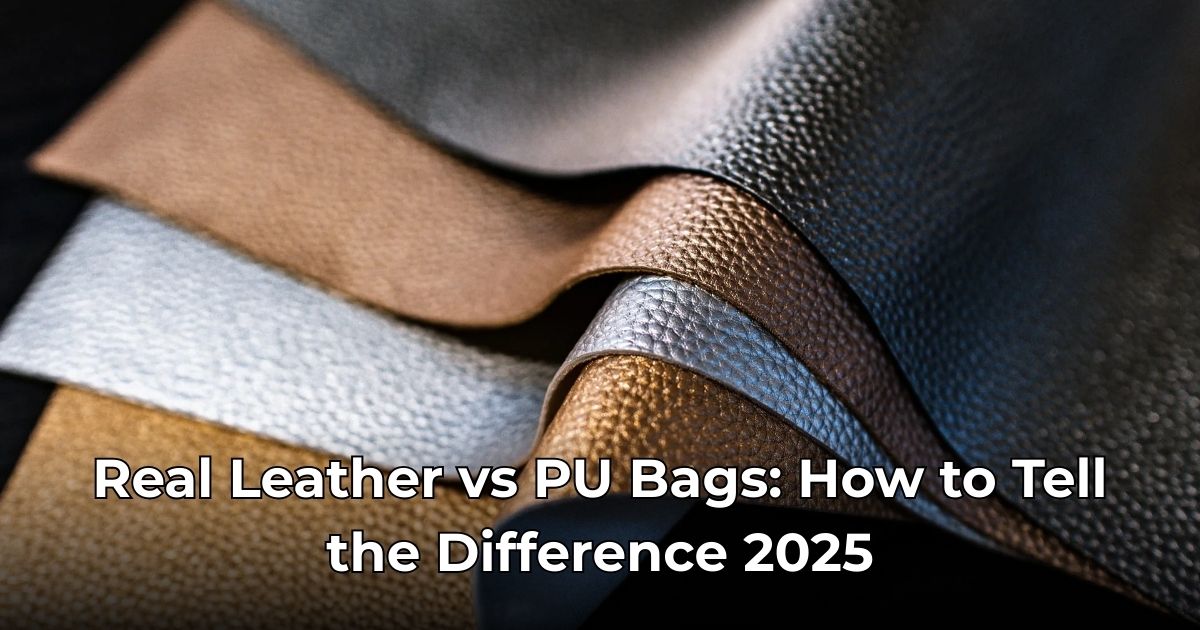
In 2025, fake leather looks better than ever. Brands quietly switched to PU, “vegan leather,” or “cactus leather” while still charging $300–$800. These 10 foolproof tests will let you spot real leather in 5 seconds - in-store or online - so you never overpay for plastic again.

1. The Price Reality Check
- Real full-grain or top-grain leather bags almost never cost under $180–$220 (even on sale).
- If it’s $89–$150 and claims “genuine leather,” 99 % chance it’s bonded leather or PU with a real-leather sticker for legal reasons.
2. The Touch & Temperature Test
- Real leather feels warm within 3–5 seconds of touching (it absorbs body heat).
- PU / vegan leather stays cool and slightly clammy, like plastic.
3. The Smell Test (Old-School but 99 % Accurate)
- Real leather smells rich, earthy, animal-like.
- PU / faux smells like chemicals, glue, or nothing at all. Do this discreetly in-store - one sniff is enough.
4. Look at the Edges
- Real leather: raw or lightly burnished edges that show fibrous layers.
- PU / bonded: perfectly smooth, painted, or rolled edges that look plastic when scratched lightly with fingernail.
5. Check the Backing
- Flip the bag or open a pocket: Real leather has a suede-like or slightly rough backing. PU has woven fabric or mesh glued on (you can often see glue lines).
6. The Water Drop Test (Do This in-Store)
- Put one drop of water on an inconspicuous area: Real leather absorbs it slowly and darkens (then returns to normal). PU beads up and wipes off instantly.
7. The Crease / Press Test
- Press firmly with your thumb for 5 seconds: Real leather bounces back slowly and shows natural creases. PU springs back perfectly or shows permanent wrinkles.
8. Examine the Grain Pattern
- Real leather has irregular, unique pores and grain - no two inches look identical.
- PU has perfectly repeated patterns (look closely under good light).
9. Read the Label Carefully (Legal Loopholes)
Allowed terms and what they actually mean in 2025:
- “Genuine leather” = lowest grade (often bonded or corrected grain)
- “Full-grain leather” or “Top-grain leather” = real, high-quality
- “100 % real leather” + “Made in Italy/Spain” = almost always legit
- “Vegan leather,” “PU leather,” “Faux leather,” “Eco leather,” “Cactus leather” = plastic, no matter how pretty the marketing
- “Leather upper / man-made sole” = only the top part is real (often thin)
10. The Flame Test (Only for Samples or Second-Hand)
- Real leather doesn’t melt or catch fire easily - smells like burning hair.
- PU melts, curls, and smells like burning plastic. (Do not do this in-store!)

Quick 30-Second In-Store Checklist
□ Price over $200? □ Feels warm + smells rich? □ Raw or suede backing visible? □ Edges look natural/fibrous? □ Water absorbs slowly? □ Grain pattern irregular? □ Label says “full-grain” or “top-grain”?
If you answer YES to at least 5 → 99 % real leather.
Best Real-Leather Brands That Are Worth It in 2025
Under $500
- Quince Italian Leather Tote – $150 (full-grain, passes every test)
- Portland Leather Goods – $120–$400 (transparent sourcing)
- Cuyana Classic Structured Tote – $298
$500–$1,500
- Madewell Transport Tote (pebbled leather)
- Sézane Milo Bag
- Polène Numéro Un
Luxury (will last 10–20 years)
- Hermès, Chanel, Louis Vuitton, The Row, Savette, Métier (all full-grain or exotic)
Red-Flag Brands That Use PU or Bonded While Marketing “Leather”
- Most fast-fashion (Zara, H&M, Mango “premium”)
- Many Amazon/Shein “Italian leather” listings
- Michael Kors (mostly coated/split leather or PU in lower lines)
- Coach outlet bags (often “coated canvas” or corrected grain)
How to Buy Real Leather Online Safely
- Zoom in on photos - look for pores and edge detail.
- Search “[brand + bag name] + real leather review” on Reddit r/handbags or YouTube.
- Buy from sites with free returns (Nordstrom, Revolve, Shopbop).
- Ask seller for close-up of backing or edges - real sellers happily provide.
Price Guide 2025 – What Real Leather Actually Costs
| Type | Average Price Range | Lifespan |
|---|---|---|
| Bonded leather | $80–$250 | 1–3 years |
| Corrected / coated | $250–$600 | 3–7 years |
| Top-grain | $400–$1,200 | 7–15 years |
| Full-grain | $600–$3,000+ | 15–50+ years |
Final Thoughts
Real leather isn’t about status - it’s about owning something that gets better with age while plastic ends up in landfill after two seasons.
Next time you’re shopping, do the 30-second test. If it fails even one - walk away. Your wallet and the planet will thank you.
Invest once in real leather. Or buy fake five times and pretend it’s the same.
You now know the difference.